
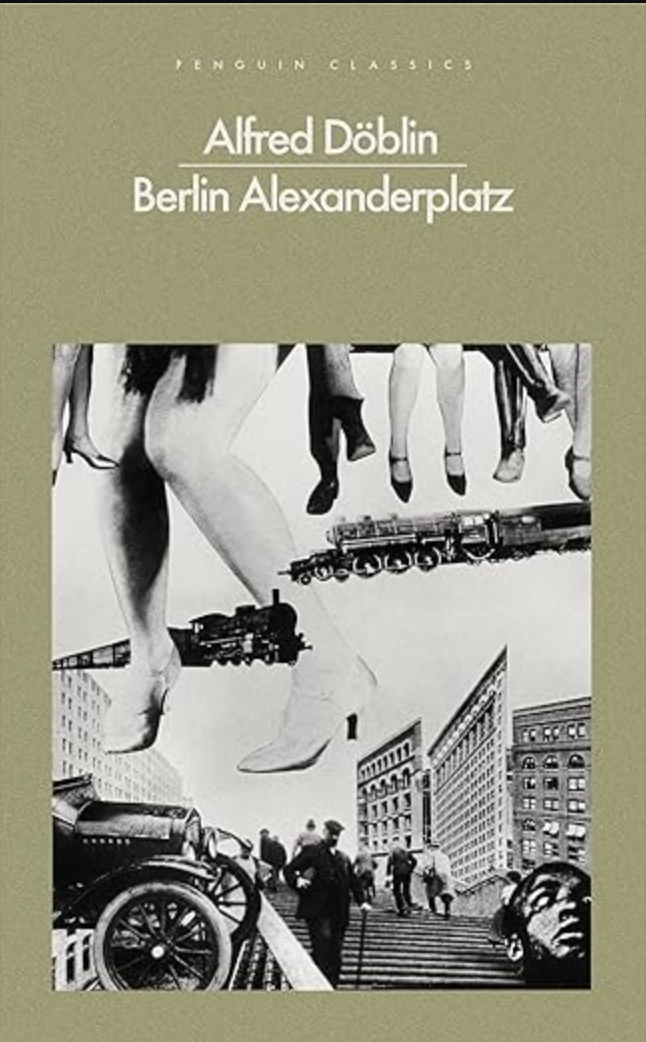
Berlin Alexanderplatz by Alfred Döblin
Theodoros Kafantaris
Published on December 16, 2025
1. Introduction
Step onto the pulsating, chaotic pavement of Weimar-era Berlin. This isn't just a novel; it's a cacophonous, electrifying experience. Alfred Döblin's 1929 masterwork, Berlin Alexanderplatz: The Story of Franz Biberkopf, is a literary earthquake that forever changed the landscape of the modern novel. It tells the story of an ex-convict trying to "go straight," but its true genius lies in its revolutionary form.
Döblin didn't just write about the city; he used the city as his language. The book assaults the reader with headlines, weather reports, song snippets, historical documents, biblical verses, and the raw, unfiltered slang of the street. It is a brilliant, overwhelming literary montage that captures the sheer, overwhelming energy of modernity, making it a foundational text of literary modernism and an absolute must-read for anyone interested in the soul of the 20th century.
2. About the Author
Alfred Döblin (1878–1957) was a German Jewish physician, essayist, and novelist whose influence stretches from the expressionists to contemporary authors. Before becoming one of Germany's most important literary voices, he practiced medicine, specializing in internal medicine and neurology, a background that informed his deep, often clinical understanding of human psychology and urban pathology.
Berlin Alexanderplatz is Döblin's most famous work, but his other major titles include The Three Leaps of Wang Lun and Homer and the Natural Epic. His writing style is characterized by a radical break from traditional narrative, employing techniques like stream-of-consciousness, shifting perspectives, and the aforementioned literary montage—a kinetic collage of language designed to mimic the bombardment of sensory data in a modern metropolis.
Döblin's life was inextricably linked to the volatile history of his time. He was forced to flee Germany in 1933 after the Nazi rise to power, relocating to Switzerland, France, and eventually the United States. This tragic context—the collapse of Weimar culture and the rise of fascism—adds a profound, heartbreaking layer to Berlin Alexanderplatz, which stands as a vibrant, doomed portrait of a culture on the brink.
3. Story Overview
The book follows the doomed path of Franz Biberkopf, a burly, simple-minded former cement worker who is released from Tegel prison after serving four years for killing his girlfriend. Franz steps out of prison determined to live an "honest, decent, and orderly" life. He makes a solemn vow to be good. However, the sheer sensory overload of the Alexanderplatz—the bustling commercial hub of Berlin—immediately shatters his resolve and sanity. Döblin's narrative plunges the reader into the city's underbelly as Franz tries to make an honest living selling neckties and working as an auxiliary waiter, struggling constantly against his own weak will and the city's predatory nature.
His attempt at reform is brutally derailed when he is pulled into a life of crime by the charismatic and utterly amoral villain, Reinhold. In a famous and harrowing scene, Franz is betrayed: Reinhold pushes him out of a moving vehicle during a botched robbery. This horrific accident costs Franz his right arm, leaving him severely disabled and symbolically mutilated by his environment and bad choices. This event marks a decisive turning point, pushing Franz deeper into desperation and dependency.
After recovering, Franz finds a fragile form of redemption and hope in his relationship with a young, kind-hearted prostitute named Mieze. Mieze genuinely loves Franz and tries to support him, bringing stability back into his life. However, Reinhold—the personification of Franz's self-destructive impulses and the city's evil—re-enters their lives. Reinhold corrupts Franz, and tragically, his evil ultimately targets Mieze. The novel builds to a crushing climax involving a devastating act of violence. Stripped of everything, Franz descends into madness, grief, and a harrowing final trial—a kind of spiritual death and rebirth. Döblin uses a powerful, extended biblical and mythological allegory to depict Franz's encounter with Death itself. Only after hitting rock bottom and enduring this psychic breakdown does Franz Biberkopf emerge, finally stripped of his old delusions, ready to work as a lowly gatekeeper, having been utterly reformed by the ruthless machine of the city.
The novel's narrative structure is as innovative as its plot. Döblin employs a montage technique, interspersing the main story with newspaper clippings, advertisements, weather reports, and even biblical passages. This creates a polyphonic, fragmented texture that mirrors the chaos of urban life. Key themes include the struggle for free will, the dehumanizing power of the modern city, and the possibility of redemption through suffering. The story is not just Franz's; it is the story of Berlin itself, a character in its own right, with its own rhythms, voices, and violent undercurrents.
4. Key Takeaways
- The Struggle for Free Will: The book is a relentless examination of whether an individual can truly change their life or if they are simply a product of their past and environment. Franz's constant failures highlight the profound difficulty of escaping one's predetermined path.
- The Modern Metropolis as Destiny: Döblin masterfully treats the city not as a mere setting, but as an active, living force—a monstrous character that molds, destroys, and ultimately reshapes the individual who lives within it.
- The Power of Narrative Form: It teaches writers and readers alike that how a story is told is just as important as what the story is about, demonstrating the revolutionary potential of collage and montage in literature.
- Empathy for the Marginalized: The novel forces the reader to confront the lives of the poor, the criminals, and the prostitutes of Weimar Berlin, offering a complex, non-judgmental portrait of society's outcasts.
- The Cycle of Violence and Guilt: Franz's story is an intense psychological study of how guilt, trauma, and the propensity for violence continue to haunt a person, even when they desire goodness.
5. Why This Book Is a Must Read
Berlin Alexanderplatz is not just an important book; it is a seismic event in literary history. It is the definitive novel of the city, perfectly capturing the anxiety, fragmentation, and dizzying speed of modern life long before authors like Kerouac or Pynchon. Döblin's radical narrative style—the use of montage, the dizzying incorporation of non-fiction text, the sheer energy of the prose—makes it a challenging but deeply rewarding read. It's a book that doesn't just describe a world; it recreates the world's sensation, making it essential reading for understanding the DNA of the 20th-century novel and the tragic, vibrant spirit of a lost era.


