
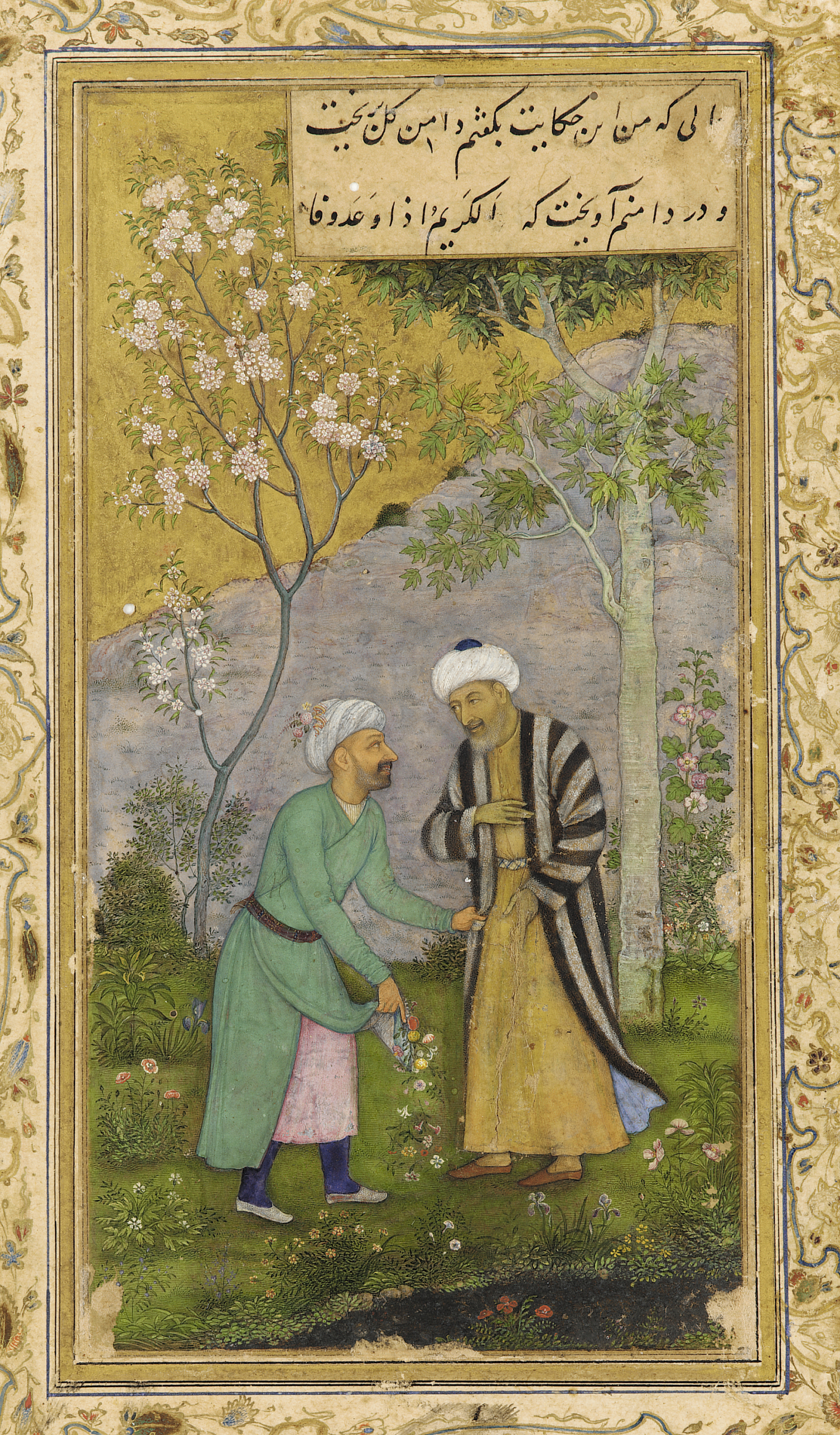
Bostan by Saadi
Theodoros Kafantaris
Published on July 08, 2026
1. Introduction
Saadi of Shiraz (c. 1210-1291) was a traveler, a Sufi, and one of the greatest poets of the Persian language. His Bostan ("The Orchard," 1257) is a collection of stories and poems illustrating the virtues: justice, kindness, humility, contentment, and love. Together with its companion Golestan ("The Rose Garden"), it has been a cornerstone of Persian education for centuries. A verse from Saadi adorns the entrance to the United Nations: "All human beings are members of one frame."
2. About the Author
Saadi, born in Shiraz around 1210, lived through the tumultuous Mongol invasions. He traveled extensively across the Islamic world, from India to North Africa, and his experiences deeply informed his writing. A Sufi mystic, Saadi's works blend spiritual insight with practical wisdom. He is revered as one of the pillars of Persian literature, and his tomb in Shiraz remains a site of pilgrimage.
3. Story Overview
Bostan is a didactic poem composed of ten chapters, each centered on a moral theme such as justice, generosity, love, humility, and contentment. Saadi weaves together stories, anecdotes, and aphorisms to illustrate these virtues. The narrative structure is loose, with each chapter containing multiple independent tales that serve as parables. For example, in the chapter on justice, a king learns from a dervish that true power lies in serving the people; in the chapter on humility, a proud scholar is humbled by a simple carpenter. Key characters include kings, beggars, sages, and fools, each representing different facets of human nature.
The book opens with a praise of God and the Prophet Muhammad, then moves into practical ethics. One notable story tells of a tyrant who, after death, is punished in the afterlife while a just ruler is rewarded—a reminder of the transient nature of worldly power. Another recounts a generous man who gives his last loaf of bread to a stranger, only to find a treasure later—a lesson in divine providence. Saadi often inserts himself into the narratives, recounting his own encounters during his travels, which lends authenticity and immediacy to the lessons.
The major themes of Bostan include the importance of compassion, the futility of greed, the value of silence, and the pursuit of spiritual enlightenment. Saadi emphasizes that true wisdom comes from experience and reflection, not from book learning alone. The literary significance of Bostan lies in its masterful blend of poetry and prose, its accessible yet profound moral teachings, and its enduring influence on Persian culture and beyond. The work has been translated into many languages and continues to be studied as a classic of world literature.
4. Key Takeaways
- Wisdom is learned through stories: Saadi uses engaging narratives to convey moral truths, making abstract virtues concrete and memorable.
- Kindness is the highest virtue: Throughout the book, acts of generosity and compassion are rewarded, while cruelty leads to downfall.
- Power is temporary; character endures: The stories repeatedly show that wealth and authority are fleeting, but a person's inner qualities define their legacy.
5. Why This Book Is a Must Read
Bostan is not merely a collection of ancient tales; it is a timeless guide to living a virtuous life. Its lessons on humility, justice, and love are as relevant today as they were in the 13th century. Saadi's poetic language is both beautiful and accessible, making the book a joy to read. For anyone interested in Persian literature, Sufi philosophy, or simply in becoming a better human being, Bostan is an essential work.


