
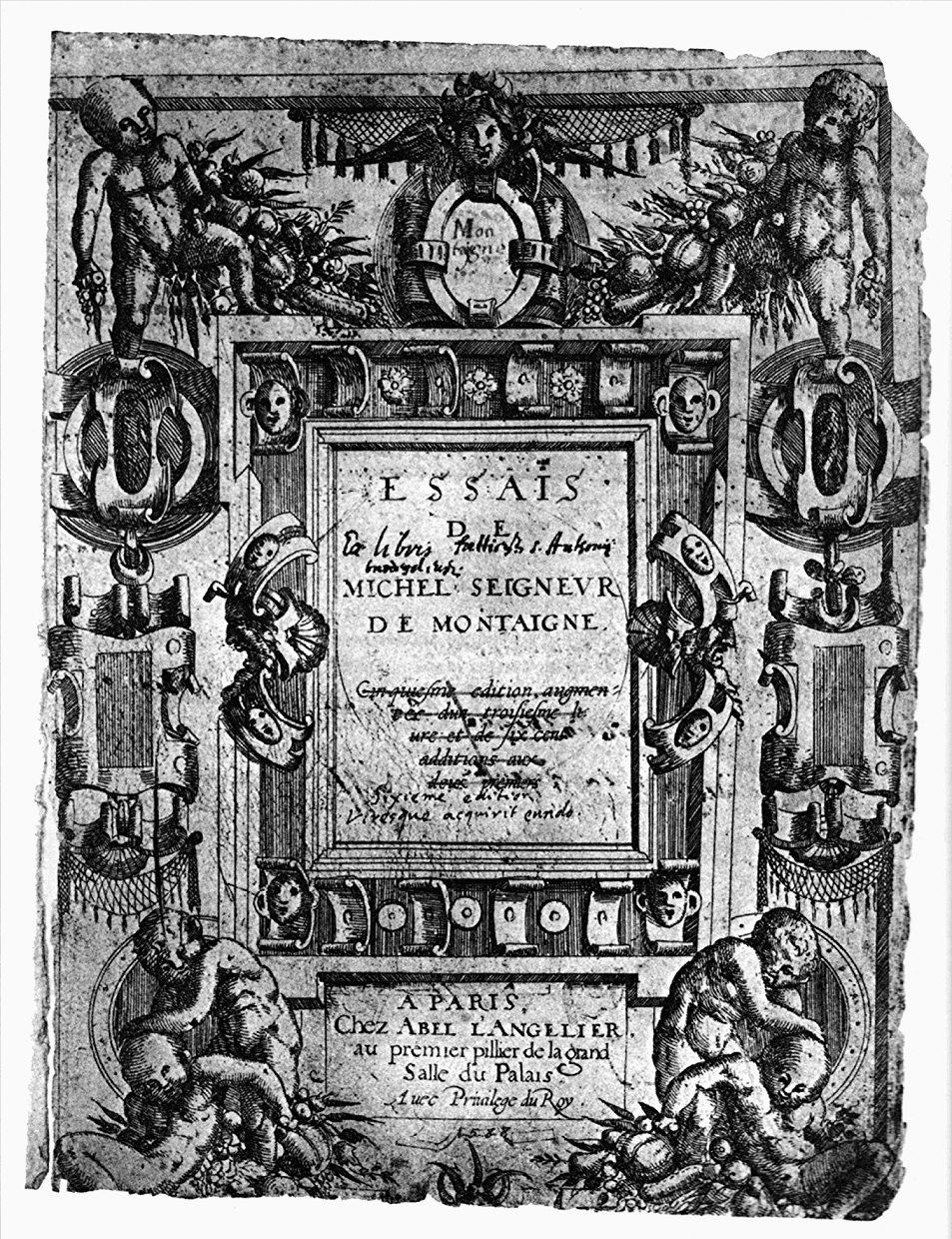
Essays by Michel de Montaigne
Theodoros Kafantaris
Published on July 08, 2026
1. Introduction
"I am myself the matter of my book." Michel de Montaigne (1533-1592) retired from public life at 38 and began writing—not treatises or memoirs, but essais: attempts to capture the movement of his own mind. The result was a new literary form and a new way of being human. Montaigne wrote about thumbs, cannibals, sleep, fear, friendship, and the last words of Socrates—all filtered through a consciousness of extraordinary honesty and charm.
2. About the Author
Michel de Montaigne was a French Renaissance philosopher, born in 1533 into a wealthy family. He served as a magistrate and mayor of Bordeaux before retiring to his estate to write. His life was marked by the religious wars between Catholics and Protestants, yet he maintained a moderate, skeptical stance. His only major work, the Essays, was published in three volumes between 1580 and 1588, and he continued revising them until his death in 1592. Montaigne's influence extends through Shakespeare, Pascal, Nietzsche, and every writer who has tried to think honestly.
3. Story Overview
The Essays are not a linear narrative but a collection of reflections on a vast array of topics. Montaigne explores themes such as friendship, education, death, and the nature of knowledge. He uses personal anecdotes, classical quotations, and philosophical arguments to examine human experience. His motto, "Que sais-je?" (What do I know?), underpins his skeptical approach. He questions authority, tradition, and certainty, advocating for tolerance and self-knowledge.
The essays are intimate and conversational, as if the reader is listening to a wise friend think aloud. Montaigne's method is to juxtapose the trivial and the profound, finding wisdom in everyday life. For instance, in "Of Cannibals," he uses reports of New World natives to critique European civilization, arguing that we often call "barbarism" what we do not understand. In "Of the Inconsistency of Our Actions," he observes that human behavior is unpredictable, shaped by mood and circumstance rather than fixed principles.
His essay "To Philosophize Is to Learn How to Die" confronts mortality with stoic acceptance, urging us to live fully in the present. Throughout, Montaigne's voice is personal and self-revealing; he admits his own weaknesses and contradictions, making his philosophy accessible and relatable. The structure of the essays mirrors the wandering mind, with digressions and returns, yet each piece coheres around a central idea.
This organic form invites readers to reflect on their own experiences, making the Essays a living dialogue across centuries.
4. Key Takeaways
- The self is the only subject we truly know — Montaigne's focus on introspection reveals the complexity and fluidity of human nature.
- Doubt is more honest than certainty — His skepticism challenges dogma and encourages open-minded inquiry.
- The essay is the form of freedom — Montaigne's meandering style mirrors the natural movement of thought, offering a model for authentic expression.
5. Why This Book Is a Must Read
Montaigne's Essays are a timeless guide to living a thoughtful, examined life. In an age of information overload and polarized opinions, his skepticism and humility offer a refreshing antidote. He teaches us to embrace uncertainty, to know ourselves, and to approach the world with curiosity and compassion. Whether you are a philosopher or a casual reader, Montaigne's voice will challenge and delight you. This book is not just to be read but to be lived with—a companion for the journey of self-discovery.


