
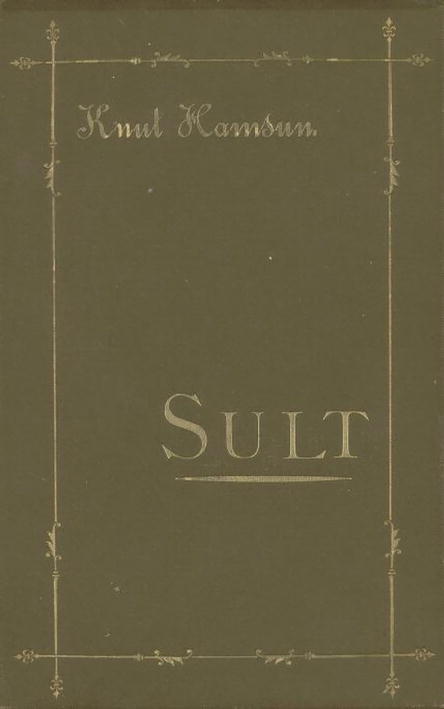
Hunger by Knut Hamsun
Theodoros Kafantaris
Published on July 08, 2026
1. Introduction
Knut Hamsun's Hunger (1890) is a landmark of modernist literature, a novel that strips away conventional plot and social commentary to plunge readers into the feverish, fragmented consciousness of a starving young writer wandering the streets of Kristiania (now Oslo). The unnamed narrator, proud and delirious, oscillates between moments of manic creativity and crushing despair, all while his body deteriorates from lack of food. Hamsun's radical focus on interiority—on the irrational, the impulsive, and the absurd—makes Hunger a shocking and enduring exploration of human extremity.
2. About the Author
Knut Hamsun (1859–1952) was a Norwegian author who won the Nobel Prize in Literature in 1920 for his epic novel Growth of the Soil. However, his early work Hunger remains his most influential, pioneering the stream-of-consciousness technique and psychological realism that would later define modernism. Hamsun's own life was marked by poverty and wandering, experiences that infuse Hunger with visceral authenticity. Despite his literary genius, his legacy is complicated by his support for Nazi Germany during World War II, a fact that continues to provoke debate about the separation of art and artist.
3. Story Overview
Hunger follows an unnamed narrator, a young aspiring writer living in Kristiania, who is slowly starving to death. The novel is divided into four parts, each marking a stage of his physical and mental decline. The plot is minimal: the narrator pawns his belongings, begs for food, and struggles to write articles or stories to earn a few coins. Yet the real story is internal—a chaotic whirlwind of delusions, obsessions, and sudden whims. He gives away his last money to a beggar, then later regrets it; he invents a nonsensical word, “Kuboaa,” to impress a woman; he chews on a wood chip to stimulate saliva and stave off hunger pangs. His pride prevents him from asking for help, even when he is on the verge of collapse.
The narrative structure mirrors the narrator's unstable mind: episodes are disjointed, time is fluid, and reality blurs with fantasy. Hamsun uses a first-person perspective that is both intimate and unreliable, drawing the reader into the narrator's paranoia and grandiosity. Key scenes include the narrator's encounter with a mysterious old man who seems to know his thoughts, his humiliating attempt to pawn a blanket, and his final decision to leave Kristiania on a ship, still penniless but clinging to a faint hope of renewal.
Major themes include the relationship between physical deprivation and mental deterioration, the absurdity of pride, and the struggle for artistic creation in the face of despair. The novel also critiques the indifference of society toward the poor, though Hamsun avoids overt moralizing. Literary significance: Hunger is often cited as one of the first modernist novels, influencing writers like Franz Kafka, James Joyce, and Henry Miller. Its raw, psychological intensity and rejection of traditional narrative conventions make it a cornerstone of twentieth-century literature.
4. Key Takeaways
- The mind under duress is the true subject: Hamsun shifts focus from external events to the chaotic interior of a starving man, capturing irrational thoughts, mood swings, and hallucinations with unprecedented depth.
- Pride can be a form of self-destruction: The narrator's refusal to accept charity or admit his need leads to ever-greater suffering, highlighting how ego can exacerbate tragedy.
- Modernism began in the stomach: By grounding existential crisis in physical hunger, Hamsun anticipates the modernist obsession with subjective experience and the breakdown of stable identity.
5. Why This Book Is a Must Read
Hunger is not merely a novel about starvation; it is a visceral journey into the extremes of human consciousness. Its unflinching portrayal of mental and physical collapse is as relevant today as it was in 1890, offering a timeless meditation on pride, creativity, and the fragility of the self. For anyone interested in the roots of modernism or the power of psychological fiction, Hunger is an essential, unforgettable read.


