
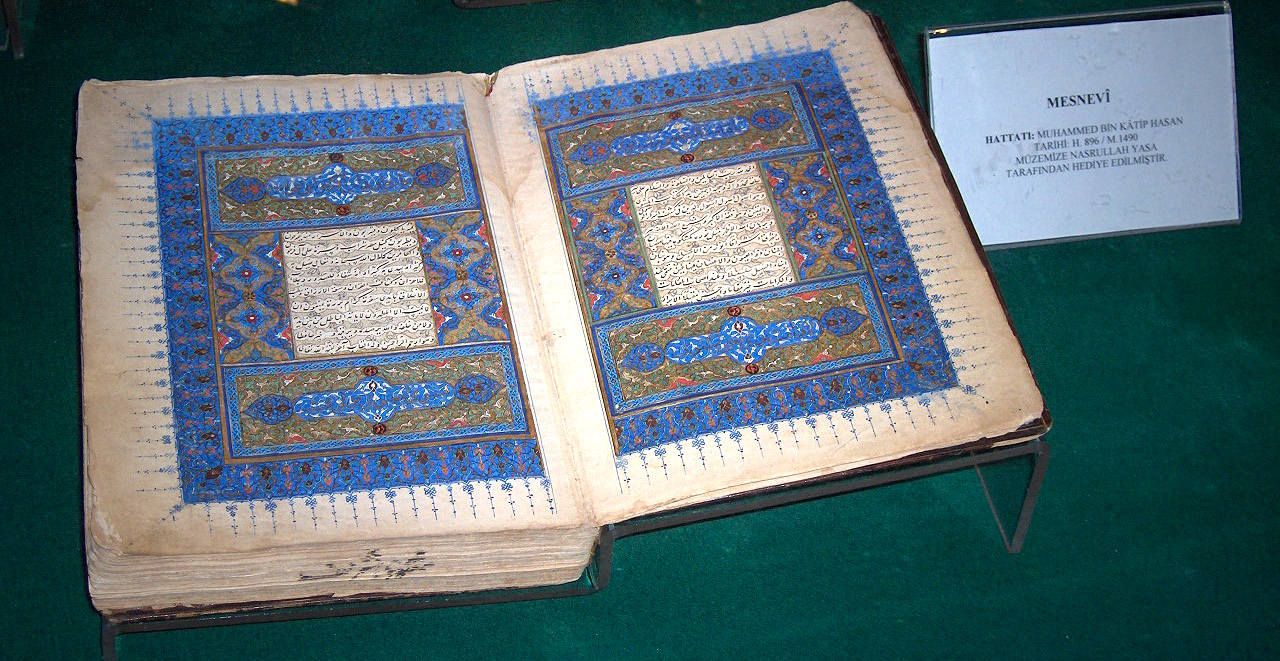
Masnavi by Rumi
Theodoros Kafantaris
Published on July 08, 2026
1. Introduction
Jalal al-Din Rumi (1207-1273) composed the Masnavi-ye Ma'navi ("Spiritual Couplets") over the final years of his life, dictating to a scribe as he walked, danced, or sat by a fountain. The resulting six books are a compendium of Sufi wisdom: stories within stories, parables, jokes, and ecstatic poetry, all pointing toward the central truth of divine love. Often called "the Quran in Persian," it is one of the most beloved works of Islamic mysticism.
2. About the Author
Jalal al-Din Rumi was a 13th-century Persian poet, jurist, theologian, and Sufi mystic. Born in Balkh (present-day Afghanistan), he settled in Konya, Turkey, where he became a renowned scholar. His life transformed after meeting the wandering dervish Shams Tabrizi, whose friendship ignited Rumi's ecstatic poetry. Rumi's works, including the Masnavi and the Divan-e Shams-e Tabrizi, have made him one of the best-selling poets in the world.
3. Story Overview
The Masnavi is a vast ocean of stories, each nested within others, creating a layered narrative that mirrors the complexity of spiritual life. The book opens with the famous "Song of the Reed"—a lament of the reed flute separated from its reed bed, symbolizing the soul's separation from God. This theme of longing and return permeates every tale.
The first book begins with the story of the king and the slave girl, illustrating how divine love heals earthly wounds. Another tale tells of a merchant who sends a parrot to India to bring back news of freedom, only to realize the parrot's clever ruse. Through these narratives, Rumi explores themes of ego, surrender, and the transformative power of love. The second book includes the story of Moses and the shepherd, where Moses rebukes a shepherd for anthropomorphizing God, only to be corrected by a divine voice that values sincere love over correct theology.
Later books delve into more complex allegories, such as the story of the lion and the hare, which teaches that wisdom can overcome brute strength. The narrative structure is non-linear, with Rumi often interrupting a story to insert a sermon, a joke, or a direct address to the reader. Key characters include prophets (Moses, Jesus, Muhammad), saints, kings, and ordinary people, all serving as mirrors for the soul's journey. Notable scenes include the tale of the chickpea boiling in the pot, which becomes a metaphor for the soul's purification through suffering. The Masnavi's literary significance lies in its fusion of Persian poetry with Sufi metaphysics, making profound spiritual insights accessible through engaging stories.
4. Key Takeaways
- Separation is the soul's fundamental condition: The reed's lament echoes the human longing for divine union, a core theme in Sufi thought.
- Stories are vessels for truth: Rumi uses parables to convey complex spiritual concepts, making them memorable and relatable.
- Divine love is the destination of all journeys: Every story points to love as the ultimate reality and the means of transcending the ego.
5. Why This Book Is a Must Read
Masnavi is not just a book; it is a spiritual companion. Its stories speak to the heart across centuries and cultures, offering wisdom that is both timeless and urgently relevant. Whether you seek solace, inspiration, or a deeper understanding of the human condition, Rumi's masterpiece will transform how you see yourself and the world. It is a work of profound beauty and depth, a treasure of world literature.


