
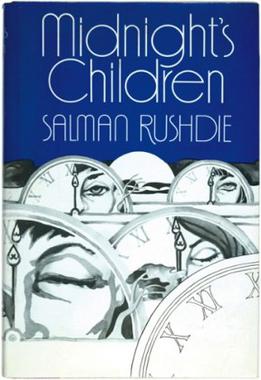
Midnight's Children by Salman Rushdie
Theodoros Kafantaris
Published on July 07, 2026
1. Introduction
"I was born in the city of Bombay... at the precise instant of India's arrival at independence." With these words, Saleem Sinai announces himself—and Salman Rushdie announces a new voice in literature. Midnight's Children (1981) is a sprawling, magical realist epic that won the Booker Prize and later the Booker of Bookers, cementing its place as one of the most important novels of the 20th century. Rushdie's masterpiece intertwines personal destiny with national history, creating a narrative that is as playful as it is profound.
2. About the Author
Salman Rushdie, born in Bombay in 1947, is a novelist and essayist known for his blend of historical fiction and magical realism. His works often explore themes of migration, identity, and the clash of cultures. After Midnight's Children, Rushdie gained international fame—and controversy—with The Satanic Verses (1988), which led to a fatwa. Despite this, he has continued to write prolifically, earning numerous awards including the knighthood for services to literature. His style is characterized by linguistic inventiveness, allusive richness, and a deep engagement with political and cultural history.
3. Story Overview
Midnight's Children is narrated by Saleem Sinai, who was born at the exact moment of India's independence on August 15, 1947. He is one of 1,001 children born in that first hour, each endowed with a unique magical power. Saleem's gift is telepathy, which allows him to convene the other midnight's children in a mystical council. The novel follows Saleem's life from his birth in Bombay through his family's tumultuous history, which mirrors the political upheavals of India: Partition, the Emergency, and the Indo-Pakistani wars.
The story is structured as a series of interconnected tales, with Saleem recounting his life to his wife, Padma. His narrative is unreliable, digressive, and self-consciously literary, often breaking the fourth wall. Key characters include his grandfather Aadam Aziz, a doctor who loses faith; his grandmother Naseem; his parents Ahmed and Amina; and the other midnight's children, such as Shiva, his rival and alter ego. The plot weaves through events like the assassination of Gandhi, the rise of Indira Gandhi, and the Bangladesh Liberation War, all seen through Saleem's personal lens.
Major themes include the relationship between the individual and history, the nature of identity, and the power of storytelling. Rushdie uses magical realism to blur the lines between reality and fantasy, suggesting that history itself is a narrative construct. Notable scenes include the midnight children's conference, Saleem's exile to Pakistan, and the devastating climax during the Emergency, where Saleem is sterilized and his powers are destroyed. The novel's literary significance lies in its innovative narrative voice, its postcolonial critique, and its fusion of Indian and Western literary traditions.
4. Key Takeaways
- The personal is national: Saleem's life events directly parallel India's political history, showing how individual stories are intertwined with larger historical forces.
- History is a story we tell: Rushdie emphasizes that history is not objective but a narrative shaped by perspective, memory, and imagination.
- Magical realism reveals political truth: The fantastical elements serve as metaphors for real political and social realities, making the absurdity of history more tangible.
5. Why This Book Is a Must Read
Midnight's Children is a landmark of postcolonial literature that redefines the possibilities of the novel. Its audacious blend of history, fantasy, and autobiography creates a reading experience unlike any other. Rushdie's prose is dazzling, his characters unforgettable, and his insights into India's journey from colonialism to modernity remain relevant. For anyone interested in the power of storytelling to shape our understanding of the world, this book is essential.


